 By
By Cannabis extraction has evolved from a relatively simple concentration process into a highly controlled manufacturing discipline. Modern facilities must recover cannabinoids and terpenes efficiently while managing product consistency, worker safety, energy consumption, contamination risks, and regulatory requirements.
The best extraction method is not necessarily the one that produces the highest yield. It is the process that reliably creates the intended product profile while meeting applicable safety, quality, and economic standards. A manufacturer producing terpene-rich live resin, for example, has different priorities from one making purified cannabinoid ingredients for standardized formulations.
What Is Cannabis Extraction?
Cannabis extraction separates desirable chemical compounds from cannabis or hemp plant material. These compounds primarily include cannabinoids such as THC and CBD, aromatic terpenes, flavonoids, and other plant constituents.
The resulting extract may be used in concentrates, vapor products, edibles, beverages, capsules, topicals, tinctures, or pharmaceutical-style formulations. Depending on the intended application, manufacturers may preserve a broad range of compounds or refine the extract until one cannabinoid becomes the dominant ingredient.
Successful extraction depends on more than the selected equipment. Plant genetics, cultivation conditions, harvest timing, drying, storage, particle size, moisture content, temperature, pressure, and extraction duration can all influence the final yield and chemical profile.
Major Cannabis Extraction Technologies
Supercritical and Subcritical CO₂ Extraction
Carbon dioxide extraction uses controlled pressure and temperature to change the solvent properties of CO₂. In its supercritical state, carbon dioxide behaves partly like a gas and partly like a liquid, allowing it to penetrate plant material and dissolve selected compounds.
Operators can adjust pressure, temperature, and flow rate to target different fractions. Subcritical conditions may be used when preserving delicate volatile compounds is a priority, while supercritical conditions can improve cannabinoid recovery and throughput.
CO₂ is nonflammable and can be recovered and reused within a properly designed system. The process can also reduce concerns about toxic solvent residues. However, the equipment requires substantial capital investment, trained operators, careful maintenance, and validated operating parameters. Extracts may still require winterization, filtration, or other refinement because CO₂ can recover waxes and lipids alongside cannabinoids.
Hydrocarbon Extraction
Hydrocarbon extraction generally uses butane, propane, or a controlled blend of both. These solvents are effective at capturing cannabinoids and volatile terpenes, making the method popular for concentrates such as live resin, wax, badder, and shatter.
Low operating temperatures can help preserve aroma and reduce the extraction of unwanted plant compounds. Solvent composition can also be adjusted to influence selectivity, texture, and processing speed.
The primary concern is flammability. Hydrocarbon processing should take place only in approved facilities with certified closed-loop equipment, appropriate ventilation, gas detection, electrical controls, documented procedures, and properly trained personnel. The finished extract must be purged and tested to confirm that residual solvents remain within applicable limits.
When operated correctly, a closed-loop system recovers most of the solvent instead of releasing it into the workspace or atmosphere. This improves safety, lowers operating costs, and reduces environmental impact.
Ethanol Extraction
Ethanol is widely used because it can process large quantities of plant material and recover a broad range of cannabinoids efficiently. It is particularly suitable for manufacturers producing crude oil that will undergo further refinement or distillation.
Temperature is a critical process variable. Warm ethanol extracts cannabinoids effectively but may also collect more chlorophyll, pigments, waxes, and other unwanted compounds. Chilled ethanol improves selectivity and can reduce the burden on downstream purification.
After extraction, the solution is filtered and the ethanol is recovered through evaporation or specialized solvent-recovery equipment. Efficient recovery is important because it reduces solvent purchases, waste, processing costs, and emissions.
Although ethanol is familiar and food-compatible, it is still flammable. Facilities must control ignition sources, storage conditions, ventilation, transfer procedures, and vapor exposure. Recovered ethanol must also be monitored to prevent cross-contamination or gradual changes in solvent quality.
Solventless Extraction
Solventless extraction uses mechanical action, water, ice, pressure, temperature, or combinations of these factors instead of chemical solvents. The main techniques include dry sifting, ice-water extraction, rosin pressing, and mechanical trichome separation.
These methods appeal to consumers who value minimal processing, strong aroma, and products that closely reflect the original plant. They also eliminate residual-solvent concerns. However, solventless does not automatically mean contaminant-free. Starting material can still contain pesticides, microorganisms, foreign material, or heavy metals, so careful sourcing and laboratory testing remain essential.
Ice-water extraction separates trichome heads from plant tissue through controlled agitation and filtration. Water temperature, agitation intensity, wash duration, material quality, and screen selection all affect purity and yield.
It is common to use the best micron for bubble hash to isolate the highest quality trichomes and remove unwanted plant contaminants. This step is key to create a clean, full-melt product that commands a premium price.
After collection, bubble hash must be dried carefully. Poor moisture control can damage texture, reduce stability, and encourage microbial growth. Freeze-drying is increasingly used because it removes moisture under controlled conditions while helping preserve color, aroma, and trichome structure.
Post-Extraction Refinement and Purification
The crude extract produced by an extraction system is not always ready for formulation or sale. Refinement removes unwanted compounds, adjusts potency, improves appearance, and creates a more predictable ingredient.
Winterization and Filtration
Winterization dissolves crude extract in ethanol and cools the mixture so waxes, fats, and lipids can solidify. These materials are then removed through filtration. Proper temperature control, residence time, filter selection, and solvent-to-extract ratio are important for effective separation.
More advanced facilities may combine staged filtration with depth filters, membrane systems, or centrifugation. These technologies can improve throughput while reducing product loss and manual handling.
Decarboxylation
Raw cannabis contains acidic cannabinoids such as THCA and CBDA. Controlled heating converts them into neutral forms such as THC and CBD. This reaction also releases carbon dioxide and can affect volatile terpenes.
Temperature and time must be controlled carefully. Incomplete decarboxylation may produce inconsistent potency, while excessive heat can degrade cannabinoids or alter the sensory profile. Closed or monitored systems can improve repeatability and capture valuable volatile compounds.
Short-Path and Wiped-Film Distillation
Distillation separates compounds according to volatility under reduced pressure. A vacuum lowers the required operating temperature, helping limit thermal degradation.
Short-path systems are common in smaller or specialized operations. Wiped-film systems spread the extract across a heated surface as a thin film, supporting faster evaporation, controlled residence time, and greater throughput.
Distillation can create highly concentrated cannabinoid oil, but it may remove much of the original terpene profile. Manufacturers producing flavored or strain-inspired formulations may reintroduce carefully selected terpenes after purification.
Chromatography and Advanced Separation
Chromatography can separate individual cannabinoids, remove selected compounds, or create ingredients with tightly controlled specifications. Flash chromatography, preparative liquid chromatography, and centrifugal partition chromatography are among the technologies used for specialized purification.
These systems are valuable when a manufacturer needs precise cannabinoid ratios or must reduce a restricted compound without extensively degrading the rest of the extract. However, chromatography increases equipment, solvent, testing, and waste-management requirements. Its commercial value therefore depends on the product specifications and market.
Innovations Shaping Cannabis Extraction
Cryogenic Processing
Cryogenic and ultra-low-temperature processing can protect heat-sensitive terpenes, reduce chlorophyll extraction, and improve selectivity. Rapid freezing also helps preserve the characteristics of freshly harvested material used for live concentrates.
The benefits must be weighed against refrigeration energy, equipment requirements, condensation control, and worker-safety procedures. Colder processing is only valuable when the improved product quality justifies the added complexity.
Ultrasound and Microwave-Assisted Extraction
Ultrasound creates cavitation that helps disrupt plant structures and improve solvent penetration. Microwave-assisted systems use controlled electromagnetic energy to accelerate the release of target compounds.
Both approaches may shorten extraction time and reduce solvent consumption in suitable applications. However, results depend heavily on scale, material uniformity, heat management, and equipment design. A process that performs well in a laboratory may require significant validation before it can deliver consistent commercial output.
Continuous and Semi-Continuous Processing
Manufacturers are moving toward systems that reduce the interruptions associated with traditional batch production. Continuous feeding, inline filtration, automated solvent recovery, and integrated material transfers can improve throughput and reduce handling.
Continuous processing does not remove the need for quality control. It requires reliable sensors, clearly defined operating ranges, automated alarms, traceability, and procedures for isolating material when a process moves outside its approved parameters.
Automation and Real-Time Monitoring
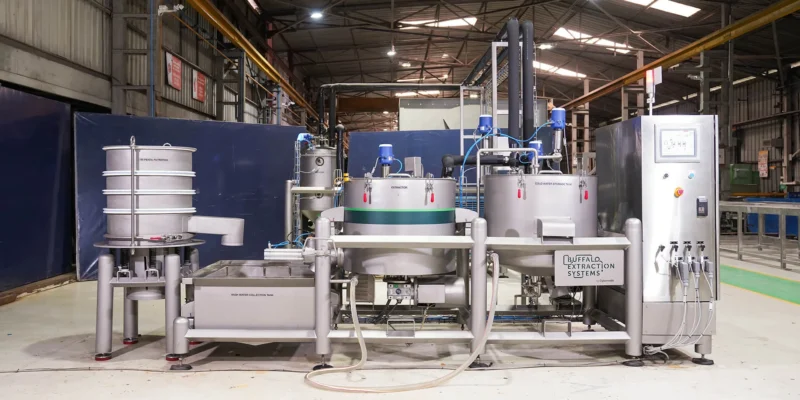
Modern extraction equipment can record pressure, temperature, flow rate, vacuum level, solvent recovery, processing time, and equipment status. Centralized controls help operators reproduce validated recipes and identify deviations before an entire batch is affected.
Data collection also supports preventive maintenance. Changes in pump performance, recovery time, pressure stability, or energy use can reveal equipment problems before a breakdown occurs. The most useful systems turn operating data into practical alerts rather than simply collecting large amounts of information.
Quality Control and Best Practices
Reliable extraction begins with representative sampling and accurate testing of incoming plant material. Moisture, cannabinoid content, terpene profile, pesticides, heavy metals, microorganisms, and foreign materials can influence both safety and processing performance.
Manufacturers should establish written specifications for raw material, intermediate extracts, recovered solvents, and finished products. Laboratory methods should be validated for the relevant product matrix, and appropriate reference materials should be used to check measurement accuracy.
Strong operations also maintain batch records, equipment-cleaning procedures, calibration schedules, deviation reports, employee training records, and chain-of-custody documentation. Testing the final product remains important, but quality cannot be created through end-stage testing alone. It must be controlled throughout the process.
Sustainability in Extraction Facilities
Extraction can consume substantial energy and produce solvent, filtration, biomass, and packaging waste. Closed-loop solvent recovery is therefore both an environmental measure and a cost-control strategy.
Facilities can also improve sustainability through efficient chilling systems, heat recovery, variable-speed pumps, insulated process vessels, water recirculation, and responsible disposal or repurposing of spent biomass. Tracking energy and solvent consumption per unit of finished extract provides a clearer performance measure than reviewing total facility consumption alone.
How to Select the Right Extraction Method
The decision should begin with the intended finished product. A manufacturer should evaluate target compounds, desired terpene retention, production volume, allowable operating costs, local regulations, facility requirements, employee capabilities, and downstream refinement needs.
Solventless processing may suit premium, small-batch concentrates. Hydrocarbon systems may be appropriate for terpene-rich extracts. Ethanol can support high-volume crude production, while CO₂ offers tunability and nonflammable operation. Chromatography may be justified when precise separation is essential.
Pilot testing is valuable before committing to full-scale equipment. Realistic trials reveal yield, cycle time, labor needs, solvent consumption, product losses, and refinement costs. These factors determine the true cost of production more accurately than extraction yield alone.
Conclusion
Cannabis extraction is becoming more precise, automated, data-driven, and quality-focused. Innovation now extends beyond the extraction vessel to include raw-material control, solvent recovery, inline monitoring, purification, laboratory verification, and environmental performance.
No single technology is ideal for every product. The strongest extraction operations align equipment and process controls with a clearly defined finished-product specification. By prioritizing safety, validated procedures, traceability, and consistent quality, manufacturers can create reliable cannabis extracts while adapting to changing consumer expectations and regulatory requirements.