 By
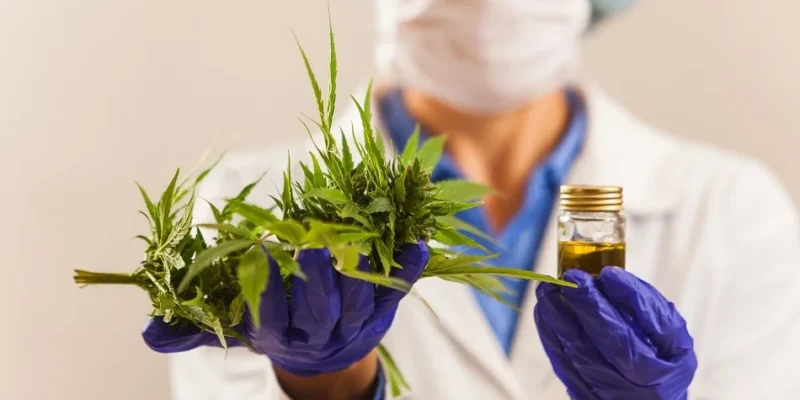
By The rapid growth of the cannabidiol (CBD) market has created both opportunity and risk. While consumer demand continues to rise, product quality varies widely. Lab verification has become the benchmark for identifying safe, compliant, and accurately labeled CBD products.
Establishing credible safety standards is not optional—it is essential. Independent laboratory testing ensures that CBD products meet regulatory expectations, remain free of harmful contaminants, and contain the cannabinoid concentrations stated on their labels.
Why Lab Verification Matters in the CBD Industry
CBD is primarily derived from industrial hemp, a variety of Cannabis sativa. Hemp plants naturally absorb compounds from soil, including heavy metals and pesticides. Without testing, these substances may remain in the final product.
Laboratory verification addresses critical concerns:
-
Accurate cannabinoid potency
-
Detection of contaminants
-
THC compliance with legal limits
-
Batch consistency
-
Consumer transparency
Because CBD products are often used for wellness purposes, inaccurate labeling or contamination can pose significant health risks. Independent testing provides measurable assurance.
Core Safety Standards for Lab-Tested CBD
1. Cannabinoid Potency Testing
Potency analysis measures the levels of:
-
CBD (Cannabidiol)
-
THC (Tetrahydrocannabinol)
-
Minor cannabinoids such as CBG and CBN
In the United States, hemp-derived products must contain no more than 0.3% THC by dry weight to comply with federal regulations. Verified labs confirm this threshold through advanced analytical techniques such as High-Performance Liquid Chromatography (HPLC).
2. Third-Party Laboratory Testing
A reputable CBD brand relies on independent, ISO-accredited laboratories rather than in-house testing alone. Third-party testing eliminates bias and strengthens product credibility.
Accreditation bodies such as International Organization for Standardization establish laboratory competence standards (e.g., ISO/IEC 17025), ensuring consistent methodology and reliable results.
3. Certificate of Analysis (COA)
A Certificate of Analysis (COA) is the documented proof of testing. It includes:
-
Batch number
-
Testing date
-
Cannabinoid profile
-
Contaminant screening results
-
Lab credentials
Consumers should verify that the COA matches the exact batch number printed on the product packaging.
4. Contaminant Screening Protocols
CBD safety standards require testing for:
-
Heavy metals (lead, mercury, arsenic, cadmium)
-
Pesticide residues
-
Microbial contamination (E. coli, Salmonella, mold)
-
Residual solvents from extraction processes
Comprehensive screening ensures the product is safe for ingestion, inhalation, or topical application.
Extraction Methods and Their Safety Implications
The extraction process directly affects product purity.
CO₂ Extraction
Often considered the gold standard, supercritical CO₂ extraction:
-
Leaves no harmful solvent residue
-
Preserves cannabinoids and terpenes
-
Allows precise control over extraction parameters
Ethanol Extraction
Ethanol is effective but requires careful solvent removal testing. Proper post-processing and lab verification ensure residual solvent levels fall within acceptable safety limits.
Regulatory Framework Influencing CBD Testing
In the United States, hemp cultivation and CBD production operate under the guidelines established by the United States Department of Agriculture. The 2018 Farm Bill legalized hemp with THC levels below 0.3%, creating a regulatory structure for testing and compliance.
However, CBD products marketed as supplements or wellness products are not uniformly regulated at the federal level. This regulatory gap makes third-party lab verification even more critical.
Indicators of a Lab-Verified CBD Product
Consumers and retailers can identify compliant products by looking for:
-
A scannable QR code linking to the COA
-
Transparent ingredient labeling
-
Clear THC percentage disclosure
-
Manufacturing dates and batch numbers
-
Lab accreditation information
Brands that readily provide documentation demonstrate accountability and commitment to safety.
The Role of Standardization in Industry Trust
Standardized testing methods reduce variability between batches and laboratories. When labs follow validated procedures, consumers receive consistent potency and safety results.
Industry-wide adoption of harmonized standards:
-
Improves market transparency
-
Reduces misleading claims
-
Protects vulnerable consumers
-
Enhances long-term brand credibility
As the CBD sector matures, verified lab standards are becoming a defining factor in separating reputable manufacturers from unreliable operators.
Challenges in CBD Lab Testing
Despite improvements, several challenges remain:
-
Variations in state-level regulations
-
Differences in testing methodologies
-
Inconsistent enforcement
-
Limited federal oversight
Until uniform federal standards are fully implemented, independent verification remains the most reliable safeguard.
Conclusion
Lab-verified CBD safety standards provide measurable assurance in an industry that continues to evolve. From potency confirmation to contaminant screening, independent testing protects consumers and reinforces product integrity.
When evaluating CBD products, transparency, documentation, and third-party validation are not optional features—they are essential indicators of quality and compliance.
Frequently Asked Questions (FAQs)
1. How often should CBD products be lab tested?
Reputable manufacturers test every production batch to ensure consistency and compliance before products reach consumers.
2. Can a CBD product be safe without third-party testing?
Without independent testing, there is no objective verification of potency or contaminant levels. Third-party testing significantly increases reliability.
3. What is ISO/IEC 17025 and why does it matter?
ISO/IEC 17025 is an international standard for laboratory competence. Accreditation under this standard ensures validated methods, calibrated equipment, and qualified personnel.
4. Are full-spectrum and isolate CBD products tested differently?
Both undergo potency and contaminant testing. However, full-spectrum products require more detailed cannabinoid profiling due to the presence of multiple compounds.
5. What happens if a CBD product exceeds legal THC limits?
Products exceeding 0.3% THC may be classified as marijuana under federal law and can face recalls, fines, or legal action.
6. How can consumers verify a COA is legitimate?
Consumers should confirm the lab name, accreditation credentials, batch number match, and recent testing date. A missing or outdated COA is a red flag.
7. Do topical CBD products require the same safety testing as ingestible products?
Yes. Although topical applications differ in absorption, they still require potency verification and contaminant screening to ensure safety.